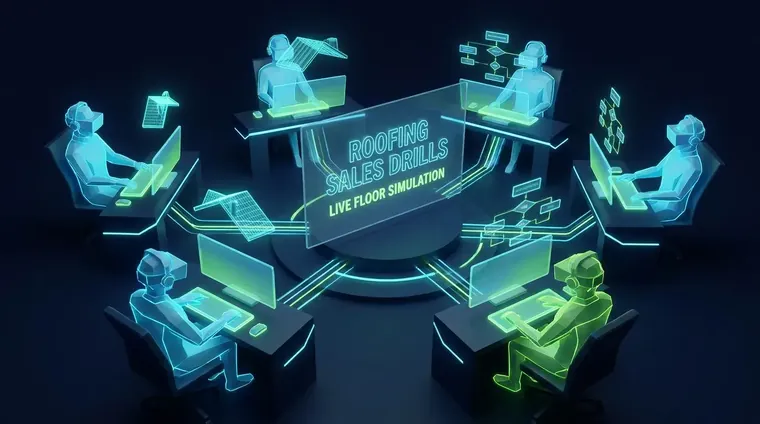
Roofing Sales Training: What the Floor Actually Teaches You
Most roofing contractors run without a documented sales process. The other 80% are winging it, different pitch on every call, no objection framework, no QA. That's where close rates collapse. This isn't a philosophy post. It lives under our broader guide on call center training for contractors, but here we go narrow: what roofing sales training looks like when it's built on a live outbound floor, not a weekend seminar. The difference between those two isn't style. It's repetition, real-call QA, and a feedback loop that runs every single day.
Why does most roofing sales training fail to stick?
Most roofing sales training fails because it's classroom-only, agents get no live repetitions, no QA feedback, and no real objection pressure before they dial.
Ride-alongs and role-play scripts have their place. But a roofer who's read the deck and never had a homeowner say "we already have someone" on call four is not trained. They're briefed. The problem is how most training gets delivered. A day of slides, a binder, maybe a shadowing session. Then the rep is on the floor alone. No QA, no call review, no one catching the moment they invented a price that wasn't theirs to invent. One uncorrected moment, an ad-libbed discount, a scope promise the company never agreed to, can cost more than the entire training day was worth. Real roofing sales training is a feedback loop, not a one-time event. The best reps improve because someone is listening to their calls, flagging the drift, and correcting it fast. Without that loop, bad habits calcify within two weeks. That pattern shows up on live outbound floors, again and again.
What does a strong roofing sales training program cover?
A strong roofing sales training program covers opener discipline, objection scripts, appointment confirmation, QA review, and compliance with FTC and TCPA rules.
- Opener discipline The first 15 seconds decide whether the homeowner stays on the line. Agents need a tightly scripted opener that names the product, earns the conversation, and doesn't oversell the appointment before it's set.
- Objection frameworks Every roofing call hits the same four or five walls: 'not interested,' 'already have a roofer,' 'insurance won't cover it,' 'call back later.' Train the specific counter to each, not a generic rebuttal, a roofing-specific one.
- Appointment confirmation protocol Setting the sit is half the job. Agents need to confirm all decision-makers will be present, re-confirm the time 24 hours out, and document homeowner answers in the CRM before the sit ever counts.
- Call QA and scoring Every appointment should be checked by a person before it's logged as a sit. QA catches the agent who skipped the 'all decision-makers' question or confirmed the wrong address.
- Compliance basics Agents must understand TCPA call-hour rules, DNC scrubbing obligations (the National Do Not Call Registry requires scrubs at least every 31 days), and the FTC's Telemarketing Sales Rule. Skipping compliance training isn't a minor gap, TCPA damages run $500 per violation, up to $1,500 if willful.
If your roofing floor isn't hitting consistent sit rates, a 30-minute call will show you exactly where the training gaps are.
If your agents are setting appointments that don't sit, the training is the problem, not the market, not the list. Book a 30-min call and we'll walk through what your current process is missing.
How does a live call center prove out roofing sales training?
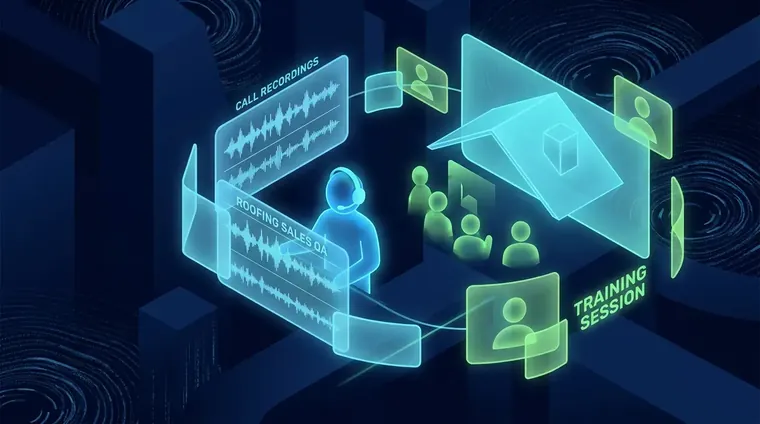
A live call center proves out roofing sales training through volume: our own outbound floor hit about $800K in sales in September 2026, one floor, one month.
Our own call center's biggest month so far was September 2026, $800K in sales. That number matters because it's not a projection or a client testimonial. It's what our own agents produced running the same roofing and windows scripts we train on. We built that floor from zero to $426K a month in 9 months. The training process was part of that build, not an afterthought. QA agents check every appointment before it counts as a sit. Homeowner confirmed, decision-makers confirmed, scope confirmed, time re-confirmed. That's not a policy slide in an onboarding deck. It's a gate that runs on every single call, and every agent knows a sit that skips that gate simply does not count. When contractors ask us how we approach appointment setting for contractors, this is the system we describe. The training and the QA aren't separate from the production floor. They're the same thing.
What's the difference between phone sales training and in-home closing?
Phone sales training sets the appointment; in-home closing is a separate skill, but weak phone training kills the sit rate before the closer ever walks in the door.
These are two different jobs. The outbound agent earns a seat at the table, confirms the homeowner, confirms every decision-maker will be home, and hands off a qualified sit. The in-home closer runs the demo and closes the contract. Most roofing companies lose because they treat phone training as optional. They invest in closers, the guys in the trucks, and underbuild the floor that feeds them. If your agents are setting sits where only one spouse is home, or the homeowner forgot the appointment entirely, your closer's close rate will read artificially low. That's not a closing problem. It's a phone training problem. The fix is specific. Train the confirmation script as hard as you train the opener. "Will [partner's name] be home as well?" is not a soft ask. It's a hard requirement before the sit counts. The 24-hour re-confirm call carries the same weight. These aren't courtesies. They're the variables that protect your closer's time and stop your cost per closed job from quietly inflating week over week. The same principle applies to inbound calls. Agents who answer the phone need a tighter script than most contractors give them. See how we think about that in our answering service for contractors breakdown.
In-house training vs. a built call center: which fits your stage?
In-house training works if you have an existing manager and low turnover; a built call center is faster when you need volume and a proven system from day one.
| Feature | Build In-House | Built-for-You Call Center |
|---|---|---|
| Setup time | 3–6 months to hire, train, and stabilize | Faster ramp on a proven stack |
| Training system | You write the scripts and QA process | Scripts, QA gates, and CRM already integrated |
| Cost structure | Payroll, software, manager time | $15K build, then monthly fee (0% financing available) |
| Data ownership | You own everything from day one | You own the accounts and the data |
| Risk | Manager turnover wipes the system | System survives agent and manager churn |
What compliance rules does roofing phone sales training need to cover?
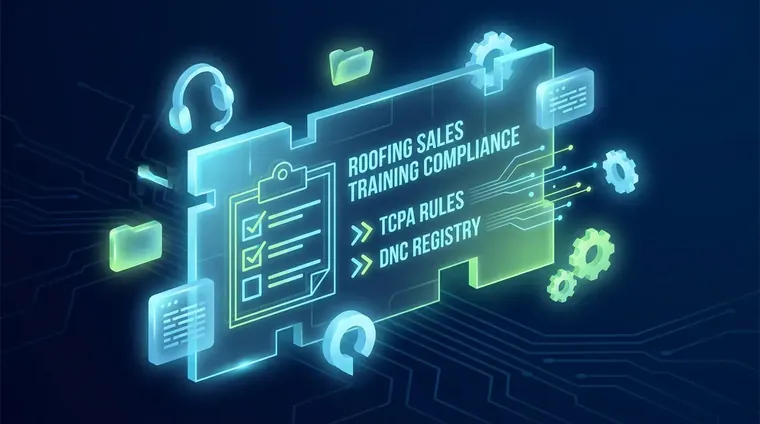
Roofing phone sales training must cover TCPA call-hour limits, DNC scrubbing every 31 days, and FTC Telemarketing Sales Rule disclosures, violations cost $500–$1,500 per call.
Compliance is not a legal department problem. It's a training problem. If your agents don't know the rules, they're the ones making the calls that create the liability. The short version: calling hours are 8 a.m. to 9 p.m. local time. Florida and several other states layer their own restrictions on top of federal rules. The DNC Registry requires a scrub at minimum every 31 days. The FTC's Q&A for telemarketers is the clearest public resource on what's required. TCPA damages under 47 U.S.C. 227 run $500 per violation, up to $1,500 if willful. That math turns ugly fast on a floor running 200+ dials a day. It gets uglier still when violations cluster because nobody caught the pattern early. Every agent on our floor learns this before they touch a dialer. Not because we're trying to be conservative. Because one compliance gap can cost more than a month of production.
Frequently Asked Questions
What is roofing sales training and does my team actually need it?
Roofing sales training is a structured system for teaching agents and reps how to open calls, handle objections, set confirmed appointments, and close in-home. If your no-show rate is above 40% or your close rate is inconsistent week to week, yes, your team needs it. Most roofing contractors in Florida and other storm-prone markets have informal scripts at best, which means the training gap is the difference between a rep who books 10 sits a week and one who books four.
How is phone sales training different from in-home sales training in roofing?
Phone sales training is for the agent who earns the appointment, confirming the homeowner, all decision-makers, and the scope before the closer ever drives to the house. In-home sales training is for the rep who runs the demo and closes the contract. Both matter, but weak phone training kills the in-home closer's close rate before they walk in the door. Train both, but don't confuse them.
What compliance rules apply to roofing outbound sales calls in Florida?
Florida agents making outbound roofing sales calls must follow federal TCPA rules (8 a.m. to 9 p.m. local time, DNC scrubbing every 31 days) and additional Florida state telemarketing regulations. TCPA violations cost $500 per call, up to $1,500 if willful. Agents should be trained on these rules before they dial, the FTC's Telemarketing Sales Rule guide and the National Do Not Call Registry are the two foundational references.
Can I outsource roofing sales training or do I have to build it in-house?
You can outsource the entire build, including scripts, QA systems, CRM setup, and trained agents, through a call center build service. Receipts Group builds outbound and inbound call centers for roofing contractors with two models: Full Management (we build, staff, and run it) or Build-for-You (we build and staff it on our stack, your team runs it). The $15K build can be financed at 0% over 12 months through a third-party lender, subject to approval.
Related reading
Ready to build a roofing sales floor that actually closes?
We build outbound and inbound call centers for roofing and windows contractors. Dialer, CRM, scripts, QA, and trained agents, one stack. Two models: we run it for you, or we build it and your team takes it from there. The $15K build can be financed at $1,250/month over 12 months at 0% through a third-party lender, subject to approval. This is the same system behind our call center training for contractors framework. It's the same floor that produced about $800K in a single month. Book a 30-min call and let's find what your roofing sales training is missing.