How Much Do Roofing Leads Cost?
Roofing leads do not have a single price. What you pay depends on the model you choose, your market and the quality of the lead itself. The useful figure is not cost per lead but cost per signed contract, which accounts for how many leads become inspections and how many of those become paying jobs. Every pricing model on the market gives you a different version of that math, so comparing them before committing to any one source is worth the effort. For a broader look at where roofing leads come from, the roofing leads overview and how to get roofing leads are good starting points.
What are the main ways roofers pay for leads?
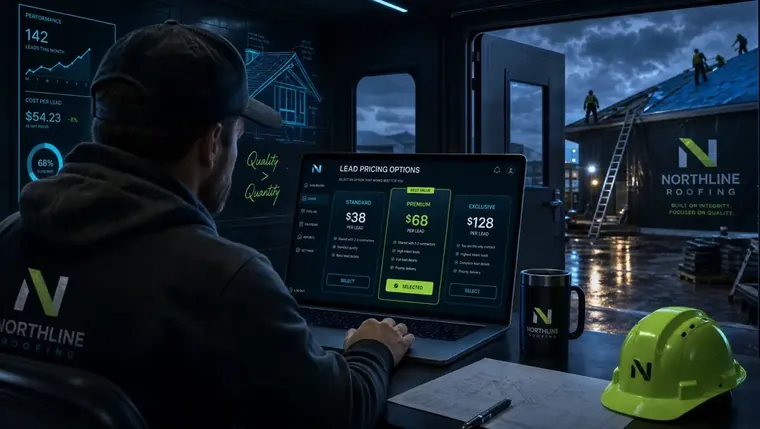
Shared pay-per-lead, exclusive pay-per-lead, pay-per-appointment, auction-based LSA leads and pay-per-close are the five main models.
Shared pay-per-lead means your lead is sold to several contractors at once, which tends to lower the per-lead price but also lowers the share that convert. Exclusive pay-per-lead is sold to only you, so the price is higher but you face no competition on that contact. Pay-per-appointment means you pay only after someone has agreed to meet a salesperson in their home. Auction-based leads through Google Local Services Ads work differently: your bid sets the most you would pay for a lead, and bids from similar local businesses influence what each lead actually costs. Invalid or low-quality leads are not charged, or are credited later. Finally, pay-per-close means a vendor is paid a share of contracts you sign, so the financial risk of an unconverted lead sits with the vendor rather than you.
How do you calculate the real cost of a roofing lead?
Divide total spend by signed jobs to find your actual cost per contract.
The formula has three steps: leads to inspections set, inspections that actually sit and sits that sign. Say you buy 40 leads in a month. If 15 become scheduled inspections and 6 of those result in a signed contract, your cost per signed job is your total monthly spend divided by 6, not divided by 40. That is the number that tells you whether a lead source is profitable. What a lead is worth walks through the full calculation.
Why do prices vary so much between roofing markets?
Storm activity, local competition, lead type and exclusivity all shift the price in any given market.
A coastal market with active storm seasons attracts more roofing contractors, which raises competition for the same homeowners. The type of job matters too, and so does how the lead was generated. Lead prices vary by location, job type, lead type and bidding mode, so even the same platform charges differently depending on where and what you are selling. No published price list reflects what you will actually pay; the only reliable number comes from talking to the vendor about your specific market.
Is pay-per-close a legitimate alternative to buying leads?
Yes. Some vendors take a share of what you close rather than charging per lead.
Pay-per-close arrangements are a real model used in the roofing industry. Receipts Group offers one version for impact windows and roofing contractors who qualify: no cost per lead, no retainer, nothing down. We are paid 15% of what you close, settled weekly. Our outbound floor sets about 650 in-home appointments a month for our own windows and roofing company, and the same process runs for partner contractors who qualify. What a lead is worth gives you a framework for evaluating any pay-per-close deal. To talk through whether our model fits your market, book a 30-minute call.
Questions on this topic
- Do Exclusive Roofing Leads Cost More Than Shared?Exclusive leads carry a higher price per lead but can still cost less per signed job than shared leads.
- Pay Per Close Roofing Leads: How It WorksPay-per-close means you only pay when a job signs, but what counts as a close needs to be in writing.
- What Is a Good Close Rate on Roofing Leads?No reliable public close rate exists for roofing leads, so measure your own across three stages instead.
- How to Turn More Roofing Leads Into Signed JobsSpeed, a consistent script and a follow-up cadence are the main levers for turning more roofing leads into signed jobs.